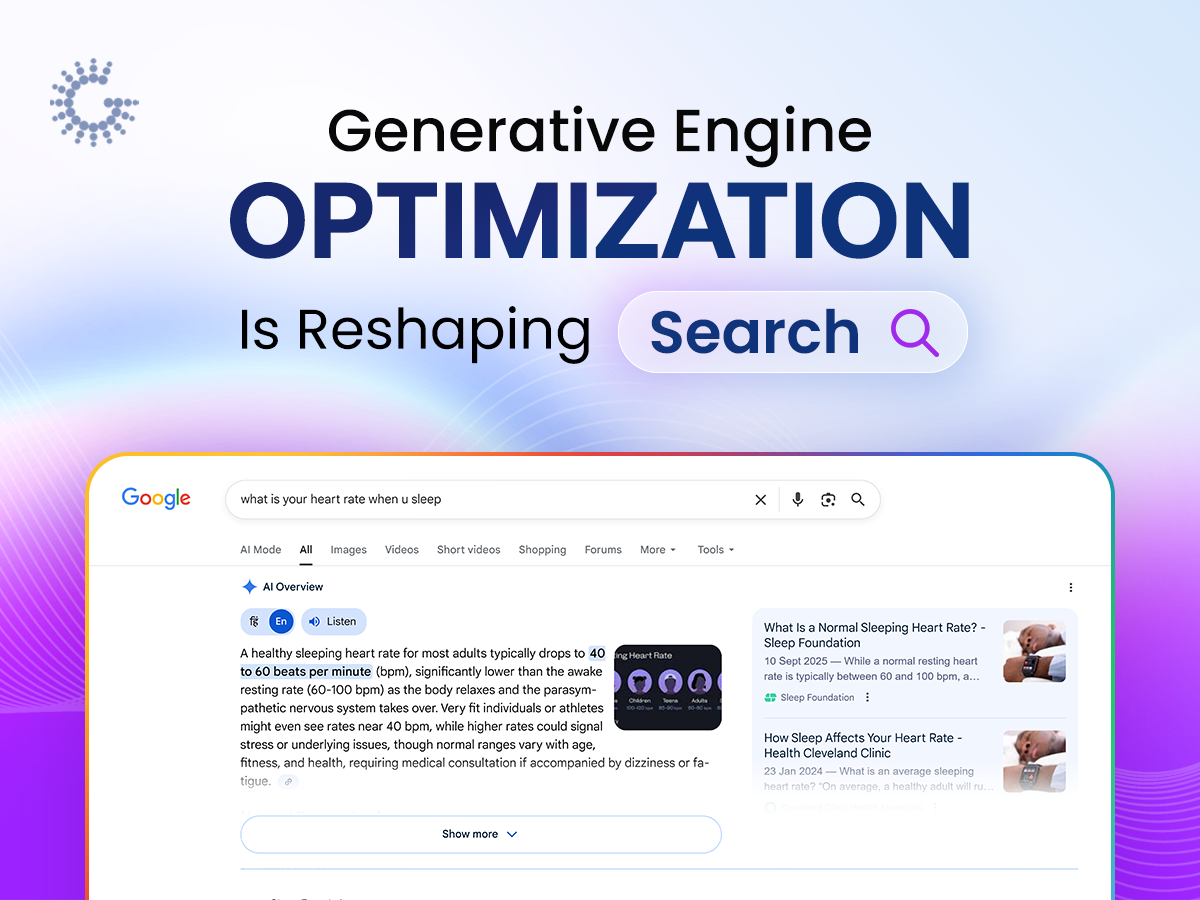
Google Search still looks like the most dominant player on the internet. If you look only at traffic numbers, market share and daily usage statistics, it still appears much larger than AI tools like ChatGPT and similar platforms. On paper, nothing about search behavior really seems to have changed in a meaningful way. But when you look closely at how people actually behave online in real situations, the picture starts to look very different.
People do not search the internet the way they used to. They are no longer clicking through multiple pages of results or opening ten different links just to find one useful answer. Instead, they ask full questions in natural language and expect an immediate, clear response.
Rather than scrolling through long lists of blue links, many users now turn to tools like ChatGPT, Claude, Gemini and Perplexity. These tools respond conversationally and explain ideas clearly. In many situations, users get exactly what they need in just a few seconds.
This change does not mean that SEO is dead or suddenly worthless. Search engines are still important and websites still play an important role in how information is discovered and shared. But it does mean that the old approach to SEO, which focused mainly on clicks and traffic volume, is no longer enough by itself. Something new is clearly happening and businesses need to pay attention before they fall behind.
This is where Generative Engine Optimization (GEO) becomes relevant.
Generative Engine Optimization, or GEO, is the process of making your content make sense to AI systems. It shapes your content so AI tools can clearly understand it and feel confident using it when answering user questions.
Traditional SEO is mostly about search results. You create pages that are designed to rank higher so people click on them and visit your website. When that happens and traffic increases, SEO has done its job. GEO works differently and aims for a much broader outcome.
With GEO, you are trying to become a source that AI tools actively rely on. Instead of focusing only on traffic and clicks, you focus on whether your content helps AI explain things accurately and clearly. Even when no one clicks a link, your brand can still be present inside the answer itself.
In the past, success usually meant ranking on the first page of Google, driving visitors to your site and turning those visitors into customers. GEO changes that definition of success. Now, success also means being recognized as an authority and being referenced within AI-generated answers.
This difference is important because generative AI does not work like a traditional search engine. Its main goal is not to send users to websites. Instead, it gathers information from multiple sources and delivers a single response. These systems care deeply about credibility. They want to give users an accurate answer immediately, not a list of links to sort through.
As a result, content that is easy to understand becomes much more valuable. When AI can quickly understand what your content is about and why it is trustworthy, it is far more likely to use it when responding to real user questions.
Generative AI is becoming the first place many people go when they want to learn something new or solve a problem. This is especially true for younger users and those handling technical or complex topics. What once required several searches and a lot of reading can now be addressed with a single clear question.
In the past, researching a topic meant reading multiple long articles and comparing different opinions across different websites. That process took time and effort. Now, people can ask a follow-up question immediately and get a clear explanation without having to start over.
Developers, marketers, founders and business owners are using AI tools every day as part of their workflows. Whether someone is trying to understand a new concept or make a business decision, AI has become a helpful shortcut that fits easily into daily work.
This change creates real pressure for websites that depend heavily on simple informational traffic. When people get answers without clicking, fewer visitors reach those sites. But this change also opens the door to something valuable for businesses that adapt.
Content that shows real expertise now stands out more than ever. Original ideas and well-organized thinking are exactly what AI systems look for when forming answers. When content is genuinely helpful and easy to follow, AI is far more likely to pull it into its responses and share it with users.
When people talk about GEO and SEO, it can sound like they are competing ideas. In reality, they focus on very different goals. Understanding those differences explains why content strategies need to change. These are the five main differences between the two approaches.
In traditional SEO, clicks have always been the primary goal. You rank high in search results, someone clicks your link and they land on your website. That visit is counted as a success. With generative search, that is usually not the case.
Many AI tools provide full answers immediately. They may not clearly show where the information came from, and even when they do, most users do not click the source. Because of this, your content needs to be strong enough to live inside the answer itself, not just strong enough to attract a click.
To make that possible, your content has to offer real value. Original research and simple explanations give AI something reliable to work with. When your content explains things well, AI can reuse it more easily.
Generative AI tends to rely on sources it sees as trustworthy over time. Instead of judging authority mainly through links and clicks, AI builds trust by seeing consistent, accurate information from the same sources across many places.
This trust comes from credibility and experience. When a brand is mentioned by others in the industry and appears in reliable spaces across the web, AI systems take notice. Authority cannot exist only on one website. It grows through visibility and reputation.
AI works best with content that is easy to scan and easy to break into meaningful sections. Clear headings, logical flow and simple explanations help AI understand what each part of your content represents.
This is why AI systems so commonly reuse well-organized pages and educational resources. Each section can stand on its own while still contributing to a larger idea. That structure makes it easier for AI to pull exactly the information it needs.
AI gathers information from many places, including forums, reviews, social media, community posts and public discussions. When your expertise shows up consistently in multiple spaces, your chances of being included in AI-generated answers increase.
Search behavior has changed significantly. People no longer type short, broken keywords into search bars. They ask full questions that reflect real situations and real problems. This means the content must go deeper and clearly address specific use cases.
When content answers real questions in context, it becomes far more useful. Both people and AI systems respond better to content that feels practical and relevant.
Building a GEO strategy starts with understanding how AI actually reads and processes content. AI prioritizes clarity above all. It wants information that makes sense immediately.
The most important ideas should appear early and be written in simple language. When something matters, it should be easy to spot and easy to understand. Real examples and simple explanations help AI trust what it is reading.
Each part of your content should stand on its own. Even if a sentence or paragraph is pulled out of context, it should still feel complete and meaningful. This makes it easier for AI to reuse your content without distorting its message.
It also helps to think beyond written articles. AI tools can understand more than just blog posts. Videos, transcripts, images with clear descriptions, charts and audio content all give AI additional ways to recognize your expertise.
When your ideas exist in different formats, they have more chances to be discovered. The more clearly your knowledge is presented across platforms, the more likely AI systems are to pick it up and reuse it.
AI systems are very good at noticing patterns. When a brand consistently explains things well, it becomes easier for AI to recognize it. That consistency helps position the brand as a reliable source.
Right now, measuring GEO success can feel confusing. There is no simple dashboard that shows how regularly your content appears inside AI-generated answers. For anyone used to tracking clicks and traffic, this lack of data can feel like a gap.
Instead of focusing only on traditional metrics, GEO is better measured by visibility and perception. Pay attention to whether your brand shows up when people ask questions using AI tools. Notice how your expertise is described and whether the information feels accurate.
It also helps to compare your presence with competitors. When similar questions are asked, observe which brands appear most regularly. Over time, patterns start to emerge. You may notice your brand being referenced more frequently or explained more clearly across different platforms.
A practical approach is to test common industry questions with multiple AI tools regularly. By doing this consistently, you can track changes and understand how your visibility improves. This hands-on testing can sometimes provide better insight than numbers alone.
GEO reflects a bigger change in how people find and use information as AI becomes part of everyday decision-making. Businesses that adapt early are in a stronger position. They are more likely to stay visible and relevant, even as traditional clicks continue to decline. This is a change worth preparing for.
If you are ready to adapt your content for what comes next, TechGlobe IT Solutions is here to help. Talk to us today.
GEO is about making your content easy for AI tools to understand, trust and reuse. The main goal is for AI systems to confidently include your content when answering user questions. This allows your brand to stay visible and influential even if no one visits your website directly.
No, GEO is not replacing SEO. SEO still plays an important role in helping your website rank in search engines and attract visitors. GEO works alongside SEO by helping your content appear inside AI-generated answers, which means businesses need both approaches today.
SEO focuses on driving traffic to a website and generating clicks. GEO focuses on clarity, authority and usefulness so AI systems can confidently explain your ideas to users. Instead of optimizing for search engines alone, GEO optimizes for how information is reused and summarized.
Websites still matter a great deal. They remain the primary source where AI systems gather and evaluate information. While the role of websites is evolving, they are still essential for building credibility and improving AI visibility.
AI tools aim to give users accurate and reliable answers quickly. They prefer content that is consistent and created by people with real expertise. Trusted sources are reused more frequently, thereby increasing long-term visibility in AI responses.
Content that is simple and easy to scan works best. Clear headings, short explanations and focused sections help AI understand the message faster. Content that can stand on its own is more likely to be reused accurately.
Keywords still matter, but they are less important than they used to be. People now ask full questions instead of typing short phrases. Content should focus on answering real problems clearly rather than repeating keywords.
You can check whether your brand appears in AI-generated answers across different tools. Ask common questions related to your industry and compare results over time. Seeing your brand referenced more can be a strong sign of progress.
Yes. AI-driven search is growing quickly and user behavior is already changing. Businesses that adapt early are more likely to stay visible and competitive as traditional traffic continues to decline.