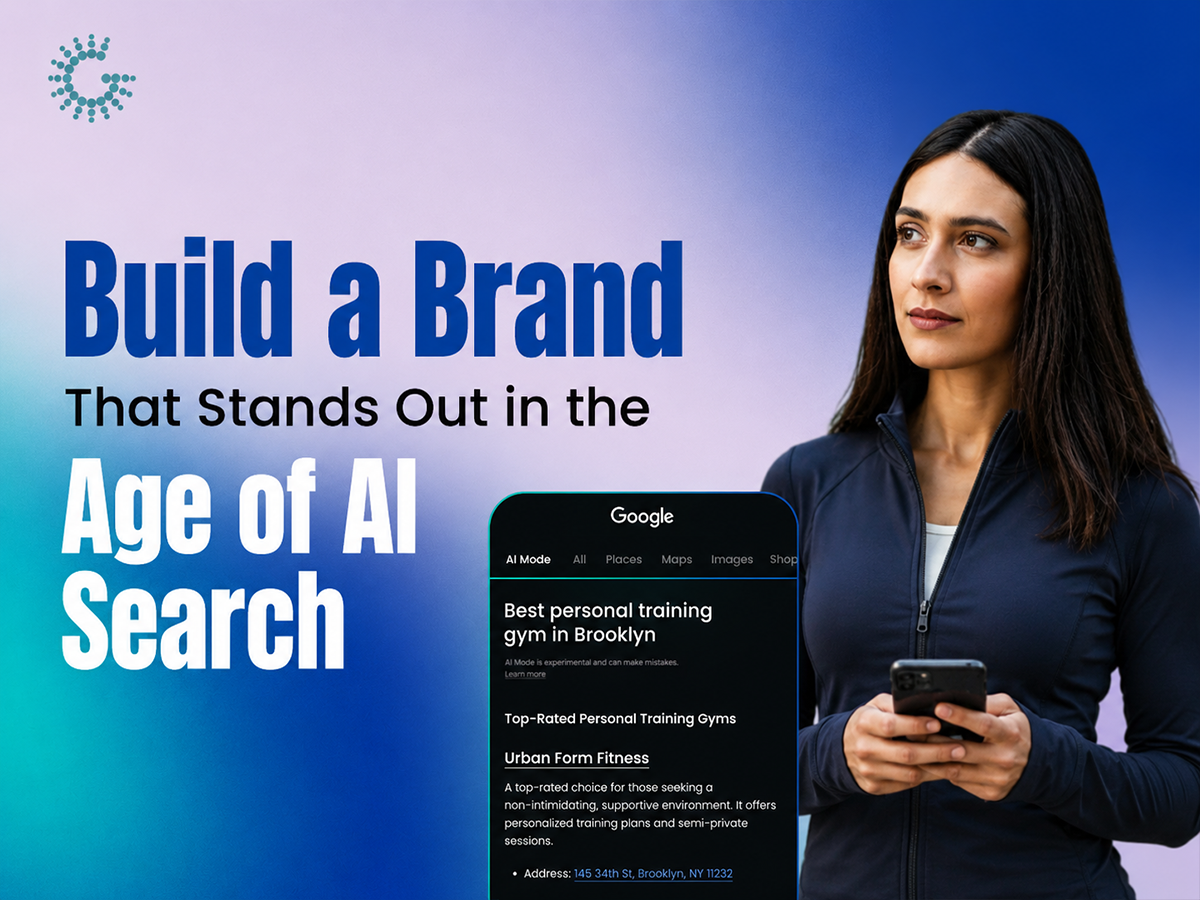
Being the default answer does not mean appearing in every AI response. No brand can control that. Results can vary depending on the question, location, available sources, user context, and the AI system used.
A more realistic goal is to make your brand closely linked to a clear need. That could mean being known for a certain service, solving a specific problem, serving a defined market, offering a particular product type, or having proven expertise in one area.
This is more useful than making broad claims such as “best company” or “top provider.” Those phrases say little about where the brand fits or why someone should choose it.
Before publishing more content, decide what you want your company to be known for. Start with these six questions:
Many businesses can answer these questions internally, but their websites tell a less consistent story. The homepage may describe the company one way, while the service pages use different terms. Staff profiles reveal little about the team’s expertise, and blog posts may have no clear link to what the company actually sells.
That creates uncertainty. Your message does not need to be identical on every page, but the key facts should agree.
If a company wants to be known for solving a specific customer problem, its content should clearly connect:
Choose the questions closest to your real work, then answer them with more depth and proof than a general article could provide.
AI search tools can gather information from several sources. Google has explained that AI Mode may break a question into related subtopics and run many searches at once. ChatGPT search can also provide answers with links and source citations.
A question about choosing a provider may lead to several related checks:
This is why one optimized article cannot make a brand the default answer. The system may need to connect a service page, an About page, a case study, a team profile, an external review, and a business listing before it has enough confidence to use the brand. Your task is to make those pieces agree.
Many websites still publish pages that target a phrase without helping a customer make a choice. A page built around a phrase such as “Best Service Providers” may explain the service, list broad benefits and end with a sales pitch. That is not enough.
A buyer choosing a provider may also need to know:
1.What should a strong service page contain?
Start with a plain explanation of the service. Say what it includes, who it is for, and which problem it helps solve. Then answer the questions that usually shape a buying decision:
Do not bury these details beneath broad claims about quality, innovation, or customer care. Get to the useful information quickly. A visitor should be able to tell within a few moments whether the service fits their needs.
2. Add supporting pages where they are useful
One service page does not need to answer every possible question. Some topics deserve their own focused page. Useful supporting content may include:
Each page should have one clear purpose. Do not create several thin pages when one strong guide can answer the question properly.
Much of the web repeats the same ideas with slightly different wording. That makes it harder for any one page to stand out. If your content adds nothing new, there is little reason for a search or AI system to use it as a source.
Google advises website owners to focus on useful, original content instead of publishing large numbers of low-value pages. It also warns against using AI to produce content at scale when that content adds little for readers.
Original content does not have to come from a large survey or an expensive research project. It can come from the work your business already does.
1. Publish what your team has learned
The people doing the work know things that general articles do not cover. They may understand:
This kind of knowledge is more useful than any other basic definition.
Speak to the people who deal with customers, deliver the service, or manage the product. Ask what they notice, what they check, and what they wish customers understood earlier. Then turn those answers into high-quality content.
2. Use first-party information
Your business may already have useful information that could support original content. This may include:
Only publish facts and figures you can support. Explain where the information came from, how it was collected, and what limits it may have. A few accurate observations are more valuable than a dramatic number with no clear source.
3. Write case studies with substance
A useful case study should do more than present a positive quote.
It should explain:
Use numbers only when they are accurate and approved for publication.
When exact figures cannot be shared, describe the result honestly. You can explain that a process became faster, a problem was reduced, a task became easier, or the customer gained more control without inventing a percentage.
The goal is not to make the outcome sound bigger than it was.
The goal is to show how the work was done and why the result matters.
You do not need to write in a strange style for AI. Google says there is no required AI writing format, no ideal page length, and no need to split every page into tiny sections. Its systems can understand related meanings even when a page does not repeat every keyword variation. Still, clear writing helps people and machines find the answer.
1. Answer the main question early
Do not make readers work through six paragraphs before you define the topic. Place a direct answer near the top of the page. Expand after that.
For example, a service provider helps customers plan, carry out, and manage a specific type of work. The right provider should assess the customer’s needs, budget, risks, timeline and ongoing support before recommending a solution.
That gives the reader a useful answer at once.
2. Use headings that carry meaning
“Key Considerations” says very little. “What Should You Check Before Hiring a Service Provider?” is clearer. A person scanning the page knows what the section contains. A search system receives the same clue.
3. Keep claims close to their proof
Avoid claims like:
They are easy to write and hard to trust. Replace them with facts:
Say less. Prove more.
4. Use tables when comparisons are needed
A table can help readers compare service levels, options, costs, features, or project stages. Do not use one merely to make a page look structured. Good formatting makes a real decision easier.
A website contains useful pages that behave like separate islands. The service page does not link to the case study. The case study does not name the people involved. The author profile does not link to the author’s work. The blog post does not point readers to the relevant service.
These missed links weaken the whole site.
Internal links should explain relationships.
A guide about choosing a product or service could link to:
Use link text that clearly describes the destination. “Read our service comparison guide” is more useful than “click here.”
Also make sure the company’s key facts are easy to find.
The website should clearly show:
An About page should not be a long origin story with no useful information. It should tell readers who runs the company, what it does, and why its claims deserve attention.
Structured data can give search engines explicit clues about a page. For example, it can identify an organization, a person, an article, a product, or breadcrumb navigation. Google may also use supported structured data to make pages eligible for rich search results.
But schema markup will not turn weak content into the default answer.
Google states that no special schema is required for its generative search features. It also says websites do not need to create special AI text files or other new machine-readable files to appear in those results.
Use structured data where it accurately describes visible content. Depending on the website, that may include:
Do not mark up reviews that users cannot see. Do not add services the business does not offer. Do not use a schema type simply because a plugin makes it available. The code and the page must tell the same story.
Every business thinks highly of itself. Independent proof carries more weight because it does not come from the company making the claim. Useful external signals may include:
Relevance is more important than volume.
A real mention in a respected industry publication is more useful than dozens of profiles on random directories. A detailed review explaining the customer’s problem and the result is more useful than a one-line rating without context.
Keep your business information consistent across these sources.
Names, locations, contact information, and service descriptions should not conflict. Small differences are normal, but major contradictions make a brand harder to verify.
Do not buy fake reviews or manufactured mentions.
Google’s own guidance warns against chasing false mentions for generative search. Its core systems still rely on content quality and anti-spam measures.
A buyer rarely has only one concern. Someone searching for a provider may begin by asking, “Which service is right for my business?” But the real decision may also depend on:
Google’s query fan-out approach is a useful way to think about this. One broad question can lead to several related searches before an answer is formed. Your content should address those connected concerns.
This does not mean forcing every detail onto one page. It means creating a clear path from the first question to the final decision.
A useful content set may include:
Excellent content has little value if search systems cannot reach it. Check the basics:
Google notes that normal Search controls also apply to its AI features. Website owners can use established controls such as noindex, nosnippet, and max-snippet to manage how content is crawled or shown.
Bing also recommends complete XML sitemaps with accurate modification dates. It states that sitemaps and tools such as IndexNow can support faster discovery of pages that have been added, changed, or removed. However, no tool can guarantee inclusion in AI-generated results.
Technical work does not make a company trustworthy on its own. It removes the barriers that stop trustworthy content from being seen.
AI-generated answers are only as useful as the information behind them. Review pages that contain details likely to change:
Do not update the publication date unless the page has been meaningfully revised. And when you refresh a page, review the whole piece rather than changing one outdated line. Old links, examples, images, and supporting details may still need attention.
AI visibility can influence a customer before a click happens. That makes measurement harder, but not impossible.
Start with a fixed set of questions that matter to the business. For example:
Test them at regular intervals across the AI search tools that matter to your audience.
Record whether your brand is:
Also, record the pages used as sources and the reason the brand appeared on those pages.
Do not treat one flattering answer as proof that the strategy is working. Look for patterns over time.
1. Watch business results too
Track:
A citation has little value if it appears for the wrong topic.
A small number of high-intent mentions can be far more useful than a large number of broad ones.
Measurement tools are also beginning to expose more of this activity. In February 2026, Bing introduced an AI Performance dashboard in Bing Webmaster Tools that shows citations, cited pages, and sample grounding queries across supported AI experiences. In June 2026, Google began testing dedicated Search Console reports for impressions and pages that appear in generative AI features for a subset of websites.
These reports help, but they do not replace your own lead and sales data.
Some tactics sound clever but solve the wrong problem.
You do not need to rebuild the whole website at once.
Days 1–30: Decide what the brand should own
Choose the services, customers, and problems that matter most. Then:
At the end of the first month, you should be able to explain the brand’s answer territory in one clear paragraph.
Days 31–60: Build the missing evidence
Improve the pages closest to a sale. Add:
Create one or two supporting resources only where a real information gap exists. Quality matters more than publishing speed.
Days 61–90: Expand trust and start measuring
Update important external profiles. Ask real customers for detailed reviews. Offer expert input to relevant publications. Publish an original finding, framework, or guide that other people may want to reference.
Then retest your priority questions. Look for movement from absence to mention, from mention to citation, or from citation to recommendation. Use what you learn to choose the next pages to improve.
TechGlobe IT Solutions helps businesses improve how they are found and understood across traditional search and AI-led discovery. That work can include technical SEO, content planning, AEO, GEO, website structure, structured data, and brand visibility. Talk to TechGlobe IT Solutions to find out where your brand is being overlooked and what needs to change.
It means making your brand one of the strongest and most relevant choices for a defined customer question. The brand may be mentioned, cited, compared, or recommended when an AI system gathers information about that need. It does not mean appearing in every answer.
No. AI-generated answers change based on the question, source availability, location, system, and user context. A business can improve its chances by publishing useful information, building proof, keeping its facts consistent, and making its pages easy to find. It cannot guarantee a recommendation.
There are differences in how results are shown and measured, but the foundations overlap. AI search still depends on accessible pages, clear information, useful content, and trustworthy sources. The added challenge is ensuring the brand can be understood and used in a direct answer, not just shown as a standard search result.
Structured data can help search engines understand what a page contains and may support rich search features. However, Google says no special schema is required for its generative AI features. Schema should be treated as a clarity tool, not a shortcut to citations or recommendations.
Small businesses can win by being more specific. A large company may cover a wide market. A smaller business can publish more in-depth information for a specific customer group, problem, service, or location. Clear expertise and strong proof can matter more than broad brand awareness for a narrow question.
Content is more useful as a source when it gives a clear answer and adds real value. Examples include original research, detailed guides, first-hand findings, transparent comparisons, useful definitions, strong case studies, and expert explanations. No format guarantees a citation.
They can help support claims made on your own website. Detailed reviews, relevant directory listings, expert interviews, and mentions from trusted publications may provide independent evidence about what the company does and how customers view it. Quality and relevance matter more than the number of mentions.
Create a fixed set of important customer questions and test them regularly. Record mentions, citations, comparisons, recommendations, and cited pages. Combine that information with branded searches, direct visits, inquiries, assisted conversions, and sales feedback. Bing and Google have also introduced reporting designed to show certain forms of AI search visibility.
Google states that websites do not need new AI text files or other special machine-readable files to appear in its AI search features. An llms.txt file should not be treated as a replacement for crawlable pages, accurate sitemaps, good internal links, or useful content. It also does not guarantee that an AI system will cite or recommend a website.
There is no fixed timeline. Progress depends on the website’s starting point, technical health, competition, content quality, available proof and how quickly updated pages are discovered. Treat it as ongoing brand and search work rather than a one-time campaign.