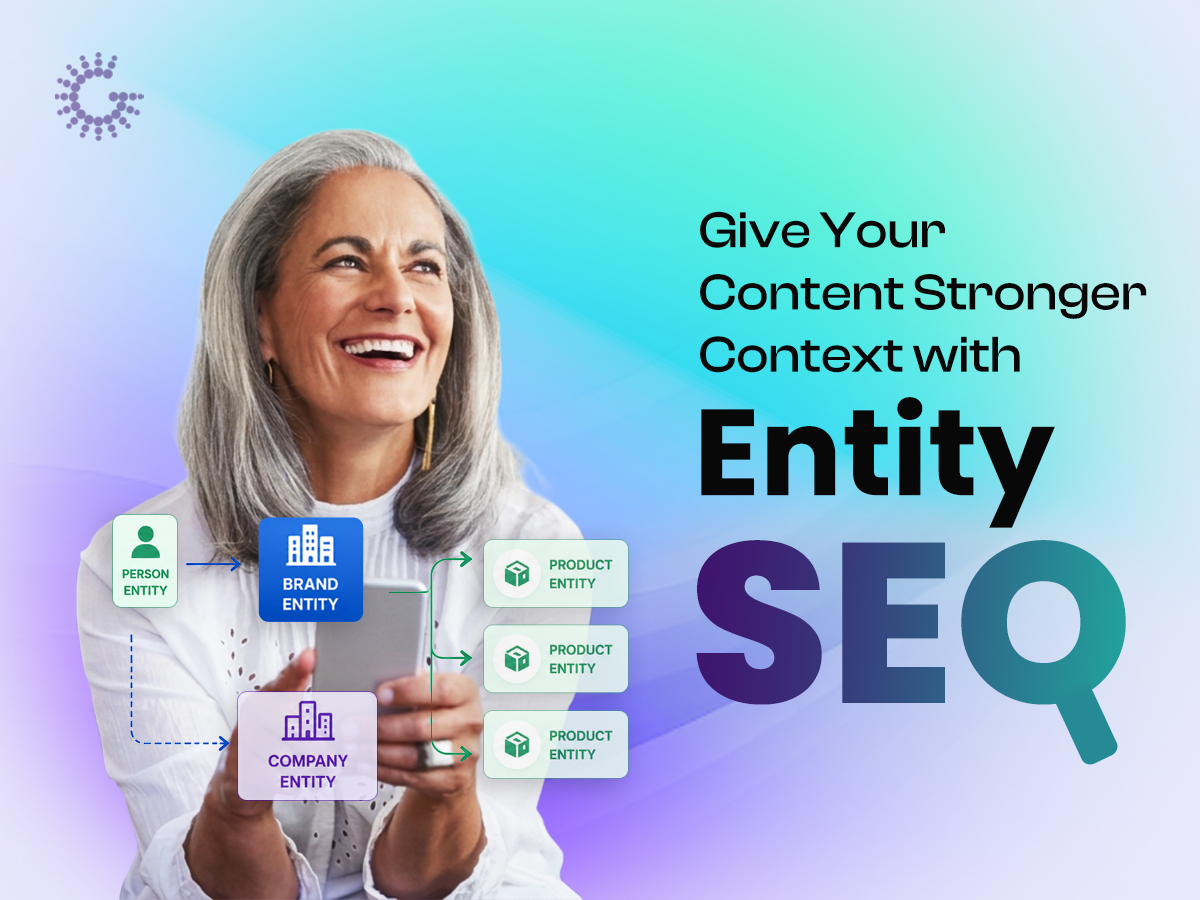
Entity SEO helps search engines and AI figure out exactly who you are and why you should be trusted. While Keyword SEO helps you rank for words, Entity SEO helps you become part of the topic itself. That is the bigger game now.
Google has AI Overviews and AI Mode, but they still depend on real search basics:
So, ranking for a keyword is not enough. You need to be clear enough, connected enough, and trusted enough for Google to understand you as a source worth using.
Not even close. But they are not everything anymore.
For years, SEO has mostly revolved around keywords. And yes, keywords are still important because they show how people compare services and how close they are to making a decision.
But keyword-only SEO has a big flaw. It tries to match words rather than understand what the page is actually about. That is where things have changed.
Google is not just looking at strings of text anymore. Its Knowledge Graph is built to understand facts about real things: people, places, brands, products, ideas, services, and how they all connect. That is why Entity SEO is important now.
A page can use the perfect keyword and still fall flat if it does not explain the topic well. But a page that covers the topic clearly, connects related ideas, uses structured data, links to the right internal pages and has real trust signals behind it is much easier for Google to understand.
An entity is any clear, distinct thing that can be named, described, and connected to other things. That could be a person, a company, a brand, a product, a service, a place, an event, a tool, a concept, a problem, or a solution.
In eCommerce, for example, entities are everywhere. “Organic skincare” is an entity and so is “face moisturizer,” “sensitive skin,” “hyaluronic acid,” “SPF protection,” “customer reviews,” “product category,” and “online beauty store.”
Your brand name can be an entity. Your product line can be one, too. Ingredients, skin concerns, delivery areas, return policies, certifications, ratings, and buying guides can all become part of the wider network around your store.
That is what Entity SEO is really about. Making the connections clear.
A search engine should not have to guess what your store sells. It should understand your product categories, who your products are for, what problems they solve, and why shoppers should trust you.
When those signals align across product pages, category pages, blog posts, reviews, FAQs, internal links, and structured data, your site becomes easier to read.
Keyword SEO focuses on the words people type, whereas Entity SEO focuses on the meaning behind those words. Keyword SEO asks, “What phrases should this page rank for?” Entity SEO asks, “What topic, product, category, brand or customer need should this page help search engines understand?”
Keyword SEO often results in isolated pages created around individual search terms. Entity SEO builds a connected knowledge system that helps shoppers, search engines and AI models understand how products, categories, problems and solutions relate to each other.
For example, keyword SEO may produce pages like:
Entity SEO organizes these into a stronger eCommerce structure:
The difference is that keywords need context. Entity SEO gives that context by connecting search terms to real products, categories, customer needs, and trustworthy brand signals.
Search engines use entities to understand the real-world meaning behind a search. After all, a single word can have multiple meanings depending on the context.
For example, when someone searches for “Apple,” the search engine must understand whether the user means the fruit, the technology company, Apple Music, Apple stock or a nearby Apple Store. Entities help search engines separate those meanings and deliver the most relevant results.
The same principle applies to eCommerce searches. If someone searches for “best running shoes for flat feet,” a search engine needs to understand several related entities at once, including:
A product or category page that only repeats “best running shoes for flat feet” may not provide enough clarity. A stronger page here will explain arch support, comfort, cushioning, stability, sizing, materials, customer use cases, product comparisons, reviews, FAQs, and who the shoes are best suited for.
That is the power of Entity SEO. It turns a flat keyword-focused page into a meaningful information hub that helps both shoppers and search engines understand the product, the problem, and the best solution.
Topical authority means your website is recognized as a reliable source on a subject area. You do not build topical authority by publishing one article with one keyword. You build it by covering a topic in depth and logically connecting related content.
For example, an eCommerce business that sells skincare products should not publish only one article targeting “best face moisturizer.” It should also cover related topics like:
Each page strengthens the others here. For example:
Entity SEO supports helpful, people-first content by encouraging businesses to create complete, user-focused resources rather than thin keyword pages.
Structured data is code that helps search engines understand a page’s content and meaning. It gives search engines clearer information about what the page includes, how the content is organized, and which entities are being discussed.
For Entity SEO, structured data can help clarify:
Structured data is not a magic ranking button and does not guarantee higher rankings or instant AI search visibility. However, when used correctly, schema markup supports your broader SEO strategy by making important page details easier for search systems to interpret.
For example, an eCommerce website can use:
Entity SEO is not only about technical optimization. It is also about brand trust.
Search engines and AI systems evaluate information from many places across the web. Your website matters, but so do your business profiles, reviews, social pages, directory listings, press mentions, author profiles, and customer proof.
If your brand name, address, services, descriptions, and expertise are inconsistent across the web, your Entity becomes harder to trust. If your brand is consistently described across your website, Google Business Profile, LinkedIn, industry directories, review platforms, and third-party mentions, your idEntity becomes stronger.
This is especially important for local and service-based businesses. AEO and GEO visibility often depends on whether your brand can be confidently understood as a legitimate provider for a specific need.
A strong Entity footprint answers these questions:
The clearer those answers are, the stronger your digital idEntity becomes.
Entity SEO changes how businesses plan content. Instead of chasing random keywords, you build a content ecosystem around your core business entities.
Start with your main business Entity: your company. Then define your product or category entities. For an eCommerce business, these might include skincare products such as face moisturizers, cleansers, serums, sunscreens, anti-aging products, acne treatments, and sensitive skin products, as well as beauty tools.
Next, define your audience entities. These may include first-time skincare buyers, people with dry, oily, or sensitive skin, beauty enthusiasts, busy professionals, teenagers, parents, and customers looking for natural skincare options.
Then define problem entities. These are the pain points your customers search for: dry skin, oily skin, acne, redness, irritation, dark spots, fine lines, clogged pores, uneven skin tone, and confusion about which product to buy.
Now connect those problems to solutions. This creates a content map that is much more powerful than a keyword list.
For example, if the problem is “my skin feels dry after washing,” the related Entity cluster may include gentle cleansers, hydrating moisturizers, hyaluronic acid, ceramides, sensitive skin, skincare routine, product ingredients, customer reviews, and dermatologist-tested products.
The solution page may be a product category page for hydrating skincare or a product page for a gentle moisturizer. Supporting content may include blog posts, FAQs, product comparison guides, ingredient explainers, customer reviews, and skincare routine checklists.
This approach gives shoppers better answers, helps them make more confident buying decisions, and provides search systems with a clearer understanding of your website’s expertise.
Internal linking is one of the most practical parts of Entity SEO. Every link helps explain relationships between pages.
For example, an eCommerce blog about “how to choose the right running shoes” should link to related category pages, product pages, buying guides, size guides, customer review sections, and articles about foot type, running surfaces, shoe materials, and injury prevention.
A running shoes category page can also link back to helpful blogs, best-selling products, FAQs, comparison guides, and related categories such as trail running shoes, walking shoes, sports socks, and shoe care accessories.
This creates a semantic network inside your website.
Instead of having disconnected pages, your eCommerce website becomes a structured shopping and learning experience. Users can explore products naturally. Search engines can crawl more efficiently. Important category and product pages receive more contextual support.
The anchor text matters too. Instead of using vague links like “click here,” use descriptive phrases such as “running shoes for flat feet,” “trail running shoe buying guide,” or “men’s lightweight running shoes.” This helps users and search engines understand what the linked page is about.
A strong Entity SEO strategy starts with clarity. Before optimizing content, define the core entities your business wants associated with it, such as your brand, product categories, customer needs, product attributes, locations, and areas of expertise.
1. Define your core brand Entity: Make sure your website clearly explains your business name, product focus, target audience, location, value proposition, and brand promise. Your homepage, About page, footer, contact page, product pages, and schema markup should all tell the same story.
2. Build product and category Entity pages: Each important product category should have a dedicated page. Do not force every product into one generic collection. For example, an online fashion store may need separate category pages for women’s dresses, men’s shirts, kids’ clothing, footwear, accessories, and seasonal collections. This helps search engines understand what your store sells and how your products are organized.
3. Create topic clusters around buyer needs: For every major category page, build supporting content that answers customer questions. A skincare category page can be supported by blogs on skin types, ingredient guides, product routines, moisturizer comparisons, sunscreen tips, and FAQs about sensitive skin. This helps your website become a trusted resource, not just a product catalog.
4. Add direct answers: AEO-friendly eCommerce content should answer buyer questions clearly. Add short answer sections to category pages, product pages, buying guides, and FAQs. Use headings that match real shopper questions, such as “Which running shoes are best for beginners?” or “How do I choose the right moisturizer for dry skin?”
5. Use structured data correctly: Add accurate schema markup where it supports visible page content. The Product, Organization, BreadcrumbList, FAQPage, Review, AggregateRating, and WebSite schemas can help search engines understand your products, prices, availability, ratings, categories, and business details.
6. Strengthen external Entity signals: Keep your brand information consistent across marketplaces, Google Business Profile, social media pages, review platforms, directory listings, and shopping profiles. Consistency helps search engines, and customers trust that your business is legitimate and reliable.
7. Show experience and proof: Add customer reviews, product ratings, testimonials, user-generated photos, buying guides, comparison tables, return policies, delivery information, and detailed product descriptions. Entity SEO becomes stronger when shoppers and search engines can clearly see proof of product quality and brand trust.
8. Measure more than rankings: Track branded searches, organic traffic, product impressions, category page clicks, add-to-cart actions, conversions, assisted conversions, customer reviews, repeat purchases, rich results, AI search mentions, and engagement. Entity SEO is about becoming more findable, more trusted, and more useful throughout the customer journey.
The first mistake is thinking keywords no longer matter. They still do. Keywords reveal what shoppers are searching for, how they describe products, and what problems they want to solve. The goal is to use keywords inside a broader Entity and topic strategy.
The second mistake is publishing too many thin product or category pages. Creating separate pages for every small keyword variation, color, size, or minor product feature can weaken your website if those pages do not provide unique value. Instead, focus on useful category pages, detailed product pages, comparison guides, and helpful buyer-focused content.
The third mistake is ignoring technical SEO. Entity SEO cannot perform well if product pages are blocked, category pages load slowly, filters create duplicate URLs, or search engines cannot crawl important pages. Technical clarity, crawlability, indexability, site speed, mobile usability, and clean site architecture are essential for eCommerce visibility.
The fourth mistake is inconsistent branding and product information. If your brand name, product names, prices, descriptions, availability, reviews, return policies, or business details vary across your website, marketplaces, social platforms, and shopping profiles, your Entity signals become weaker.
The fifth mistake is writing only for algorithms instead of shoppers. Entity SEO works best when content is genuinely helpful, specific, and connected to real customer needs. Product descriptions should answer buying questions, category pages should guide decisions, and blogs should help shoppers compare, choose, and trust your products.
Search has changed. Ranking is no longer only about matching the right keyword. It is about being understood as the right answer.
Entity SEO helps your business move from keyword visibility to topic authority, from isolated pages to connected content, and from basic rankings to a trusted digital presence. As AI search, AEO, and GEO continue to shape how users discover information, businesses need a strategy that makes their brand clear, credible, and easy to choose.
The brands that win will be the ones search engines can understand and customers can trust.
If you want your business to be found, understood, and chosen across Google, AI search, and every answer-driven discovery platform, talk to TechGlobe IT Solutions today.
The main takeaway is that Entity SEO helps search engines better understand your brand, products, categories, topics, and authority. Instead of only ranking for keywords, your eCommerce website becomes connected to the right product types, customer needs, buying questions, reviews, and trust signals.
Entity SEO is more important because modern search engines and AI answer systems focus on meaning, context, relationships, and trust. Keywords still matter, but they work best when supported by strong category pages, helpful buying guides, detailed product information, structured data, customer reviews, and consistent brand signals.
Yes. Keyword research remains useful because it reveals how shoppers search for products, compare options, and describe their needs. However, eCommerce businesses should not build pages only around exact keywords. The stronger strategy is to use keywords as signals and then create content around complete product topics, buyer questions, comparisons, and search intent.
Entity SEO helps AI search systems understand what your store sells, which product categories you specialize in, what problems your products solve, and why shoppers should trust your brand. This improves your chances of appearing in answer-based results, AI summaries, product comparisons, featured snippets, and generative search experiences.
The best way to start Entity SEO for an eCommerce website is to clearly define your brand, product categories, target shoppers, locations, and core topics. Then build strong category pages, detailed product pages, helpful buying guides, internal links, structured data, FAQs, reviews, comparison content, and consistent brand profiles across the web.