A page can be well written, technically sound and even optimized around the right keyword. But it can still fail to rank strongly.
Why?
Because search visibility is not determined by keywords alone. It is shaped by how well a page matches what the user is actually trying to accomplish.
A person searching for a term may want a definition, a step-by-step guide, a comparison, a product page, a service page or a direct answer. If the page does not align with that need, rankings become harder to win and even harder to keep.
This is where many SEO strategies lose momentum.
Businesses focus on finding keywords with enough volume and then building content around them. That sounds logical. But keyword targeting without intent alignment can lead to content that looks relevant on the surface while missing the deeper reason the search happened in the first place.
That mismatch affects performance in several ways:
This is why search intent mapping is so important.
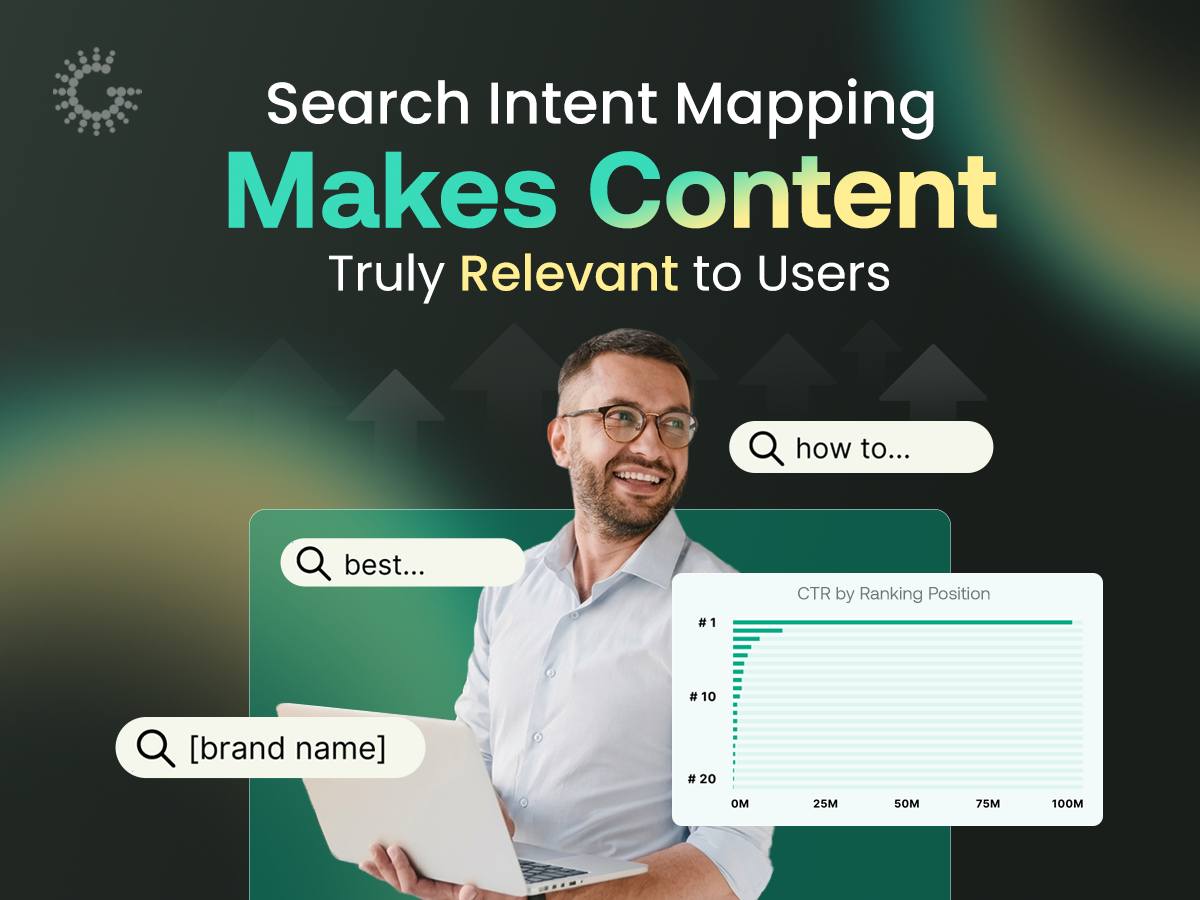
Search intent mapping helps businesses connect keywords to the right content type, the right content angle and the right stage of the user’s decision-making journey. It brings structure to content planning and makes SEO more strategic. As a result, businesses can create pages based on what users truly expect to find.
Search intent mapping is the process of matching keywords to the real purpose behind a search and then assigning the right type of page to meet that purpose.
In simple terms, it answers a very important question. When someone searches for this keyword, what do they actually want? That answer shapes the content strategy.
A keyword may suggest one thing at first glance, but the search results reveal a more specific expectation. Some searches are informational, some are commercial, some are transactional and some are navigational. Search intent mapping helps businesses identify those differences before they create content.
This is crucial because a keyword by itself does not tell the full story. Two keywords with similar wording can lead to very different search expectations. One may require a blog post. Another may require a landing page. Another may need a comparison guide or a category page.
Search intent mapping turns keyword research into decision-making.
It helps businesses decide:
Without that clarity, content planning becomes much weaker.
Search engines are trying to return the most useful result for the user’s actual goal. A page can mention the target phrase in the title, headings and body copy. But if it does not solve the right problem in the right way, it may still struggle to rank.
Search engines evaluate relevance in context. They look at how well the page aligns with what users appear to want from that query. That is why intent is so important.
If users searching a term mostly want educational content, a service page may not perform well. If the query suggests strong buying intent, a long educational article may underperform against product or commercial pages. The content has to fit the search expectation.
This is also why some pages never improve even after on-page SEO is strengthened.
The issue can be mismatch. When the page type, content depth or angle does not align with the intent behind the query, rankings become harder to achieve because the content is solving the wrong version of the problem.
Search intent is generally grouped into four broad categories.
This is when the user wants to learn something. They may be looking for explanations, definitions, guides, examples or frameworks. Queries such as “what is search intent,” “how SEO works” or “how to improve website speed” fall into this category. These searches usually perform best with educational content.
This is when the user already knows where they want to go. They may search for a specific brand, company, platform or tool. In this case, the user is trying to reach a known destination.
This is when the user is researching before making a decision. They may search for comparisons, best options, reviews, features, pricing or service information. The user is evaluating choices. Commercial intent sits between informational and transactional intent.
This is when the user is ready to take action. They may want to buy, book, request a quote, sign up or contact a provider. These searches usually benefit from pages that are direct, conversion-focused and clearly aligned with the service or product being sought.
These categories are useful, but real search behavior can be more nuanced. Many keywords contain blended intent. That is why businesses need to study what the search results are actually rewarding.
Because they treat keyword matching as enough. This is a very common mistake.
A business finds a keyword connected to its services and assumes the obvious page should target it. But the keyword may not reflect the same intent the business sees in it.
The business may interpret the query commercially, while searchers are still in an informational stage. Or it may create a blog post when search results are clearly favoring landing pages and provider pages.
The page may be relevant in a broad sense, but it is not relevant in the precise way the search results require. As a result, rankings remain weaker than expected even though the keyword choice seemed correct.
This is why search intent mapping is important before the content is created. It helps businesses avoid building the wrong asset for the wrong opportunity.
It improves SEO by making content more aligned, more useful and more competitive.
The first benefit is stronger ranking potential. When a page matches the dominant intent of a keyword, it is more likely to satisfy both search engines and users. That increases the chance of stronger visibility.
The second benefit is better engagement. Users are more likely to stay on the page, keep reading and move forward when the content matches what they expected to find. That improves the overall experience and makes the page more valuable.
The third benefit is better conversion strategy. Search intent mapping helps businesses place the right message at the right stage. Informational pages can educate. Commercial pages can compare. Transactional pages can convert. That creates a smoother path from search to action.
There is also a strategic benefit. Search intent mapping reduces wasted content production. Businesses stop creating pages that compete against the wrong SERP pattern. They make better choices about whether a keyword needs a blog, a guide, a service page or something else entirely.
That makes content planning more efficient over time.
Because a keyword tells you what people type, but not always what they mean. That difference is huge.
A keyword may look high value because it has search volume and topical relevance. But if the search results show a different intent pattern than expected, the keyword cannot be approached effectively without adjustment.
This is where many SEO strategies become too mechanical.
They focus on search volume, difficulty and keyword placement. Those things are important. But they do not replace intent analysis. A page that targets the wrong intent can fail even when the traditional SEO checklist looks strong.
Search intent mapping adds the missing layer. It moves SEO from keyword collection to real search understanding.
The strongest way is to study the search results directly. The SERP usually reveals what kind of content is currently considered the best fit for that query. It shows:
A keyword may sound informational, but the results may show product pages. A query may look transactional, but the top results may mostly be guides and comparisons. The search results are generally the clearest signal of how the keyword should be treated.
Businesses should also look at the wording of titles and headings. Those patterns tend to reveal what searchers care about most. For example, if top results emphasize “best,” “vs,” “cost,” “examples” or “how to choose,” the underlying intent becomes easier to understand. Those clues help shape better page decisions.
A strong search intent map usually connects several elements together. It includes:
This turns SEO planning into a more structured system. Businesses can create a clearer framework showing why each keyword is important and what kind of content should target it. That makes it easier to build topic clusters, avoid cannibalization and keep the website aligned with real search behavior.
Here are five common warning signs businesses should pay attention to.
If the keyword placement looks strong, the content is indexed and the page is technically healthy, but rankings remain weak, the issue may be intent mismatch.
If the page attracts impressions and clicks but engagement feels weak, users may not be finding what they expected. That usually signals that the content angle or page type is misaligned with the query.
If you are trying to rank a blog post where service pages dominate, or targeting a commercial query with a purely educational article, the mismatch becomes obvious when you compare your page to what is already winning.
Sometimes the keyword is relevant but the intent stage is different from what the business expected. Traffic arrives, but the user is not ready for the action being pushed on the page.
When intent is not mapped clearly, businesses can create overlapping pages without a good reason. That weakens content structure and can create internal competition.
There are many benefits, but these are among the most important.
The page is built around the searcher’s actual goal, not just the phrasing of the query. That improves the match between content and search intent.
Intent mapping reduces the chance of sending a keyword to the wrong asset. That improves focus and creates clearer ranking opportunities.
When a page meets expectations well, users are more likely to stay, read, explore and trust the site.
Intent mapping makes it easier to build connected content clusters where each page has a clear role. That improves both usability and topical clarity.
Businesses spend less time producing pages that never had a strong chance to rank in the first place. Resources are used more strategically.
It helps businesses connect SEO to decision-making stages more effectively.
Not every user is ready to convert the first time they search. Some are just learning. Some are comparing options. Some are narrowing choices. Some are ready to act. Search intent mapping helps businesses create pages that match each of those stages properly.
That is crucial because SEO performance is also about moving them forward in a useful way.
An informational page can attract early-stage users and introduce the topic clearly. A commercial page can help them compare options. A service page can capture higher-intent visitors who are ready to take action.
When those stages are mapped well, the website becomes more coherent. And as a result, the business builds a content system that supports discovery, evaluation and conversion in a more natural sequence.
Yes, very easily. Keyword cannibalization happens when multiple pages target similar terms without clearly distinct intent roles. One page may be informational. Another may be semi-commercial. Another may cover nearly the same topic from a slightly different angle but without enough separation.
That confuses the content system.
Search engines may struggle to understand which page should rank for which query. Rankings become unstable. Pages alternate in visibility. Stronger performance is diluted across overlapping assets.
Search intent mapping helps prevent this. When each keyword cluster is mapped to a specific intent and a clearly defined page purpose, overlap becomes easier to control. Each page serves a more deliberate role. That creates a cleaner SEO structure.
Not every content strategy improves when intent is discussed. Sometimes businesses mention intent without applying it properly.
A keyword can look obvious and still behave differently in search. Relying on assumptions instead of actual search results leads to poor decisions.
Some keywords have mixed intent. Businesses that force them into a single content format may miss what users actually expect from the search.
A blog is not always the answer. Neither is a service page. Search intent mapping works only when businesses are willing to choose different content types where needed.
A keyword may be relevant to your services, but the searcher may still be too early in the decision process for a hard-sell page. Businesses that ignore this create pages that feel misaligned and underperform.
The process should be systematic.
It usually starts with keyword grouping. Businesses gather related keywords into topic clusters rather than treating every variation separately. Then they review the SERP for those clusters and identify the dominant intent pattern.
Next, they decide which page type best serves that intent.
That may be:
After that, they define what the page must include.
This is where structure becomes important. The content should answer the core intent early, cover expected subtopics and make the next step clear for the user. Internal linking should also support movement between different intent stages.
In many cases, businesses do not need to start from scratch. They need to refine what already exists.
Look at your highest-value topics first. Compare your pages with what currently ranks and identify whether the intent match is strong or weak.
Check whether each keyword is assigned to the right kind of page. Sometimes performance improves more from changing the asset type than from rewriting the content itself.
If two pages cover similar topics, define the intent difference clearly. One may target informational exploration while the other targets service evaluation.
Sometimes a page is close to the right fit but fails to communicate relevance quickly enough. Stronger introductions and headings can improve alignment.
Link educational pages to commercial pages and commercial pages to conversion pages where it makes sense. This supports both users and overall content strategy.
A strong strategy treats intent as the foundation of SEO planning.
Instead of asking only, “Which keyword should we target?” the business also asks:
Businesses create fewer mismatched pages. They build stronger topic clusters. They improve the user journey. And they give each page a clearer reason to exist. That usually leads to more stable rankings over time because the content is grounded in actual search behavior.
The future will likely make intent alignment even more important.
Search engines continue getting better at understanding context, purpose and user expectations. At the same time, users have more options, shorter attention spans and higher standards for usefulness. Rich SERPs, AI-driven answers and more selective clicking behavior mean that weakly aligned content will struggle even more.
That raises the bar for SEO.
Businesses will need content that is not only optimized, but also clearly mapped to why the search is happening. Pages will need stronger purpose, better structure and more precise relevance. Topic coverage will need to feel intentional rather than scattered.
In that environment, search intent mapping becomes more than a content tactic. It becomes part of how smarter SEO is built.
If your business is creating content around important keywords but rankings remain inconsistent, the issue may not be content volume alone. The issue may be that your keyword strategy is not fully aligned with user intent.
At TechGlobe IT Solutions, we help businesses build SEO and content strategies that go beyond basic keyword targeting. We focus on understanding what users actually want, mapping keywords to the right pages, strengthening content structure and creating intent-led content systems that support stronger rankings and better conversions over time.
Search intent mapping is not just a technical SEO concept. It is one of the clearest ways to make your content more relevant, more strategic and more competitive in search.Talk to us today if you want to build content that matches what your audience is really searching for.
Search intent mapping is the process of connecting keywords to the actual goal behind a search and assigning the right type of content to match that goal. It helps businesses create pages that are more relevant to what users expect.
Search intent is important because search engines want to rank pages that best satisfy the user’s purpose. If a page targets the keyword but does not meet the underlying intent, rankings can remain weak.
The main types are informational, navigational, commercial and transactional intent. Each one reflects a different kind of user goal and requires a different content format.
The best way is to study the search results for that keyword. Look at which page types are ranking, what titles and headings emphasize and what kind of information users appear to expect.
Yes. Search intent mapping helps businesses align pages with the right stage of the user journey. That makes it easier to educate early-stage visitors, support evaluation and convert higher-intent users more effectively.
No. It is useful for blogs, service pages, landing pages, category pages and other content types. Any page targeting organic search can benefit from better intent alignment.
Yes. When multiple pages target similar keywords without clear intent separation, they can compete against each other. Search intent mapping helps define the role of each page more clearly.
Not always. Many related keywords share the same intent and can be targeted effectively by one strong page. Splitting them unnecessarily can create overlap and weaker content.
The page may still be indexed and visible, but rankings are usually harder to win and maintain. Users may also leave quickly if the page does not provide the kind of answer they expected.
Start by reviewing your most important keywords and comparing them against current search results. Identify the dominant intent, assign the right page type and make sure each page has a clear purpose within your broader content strategy.