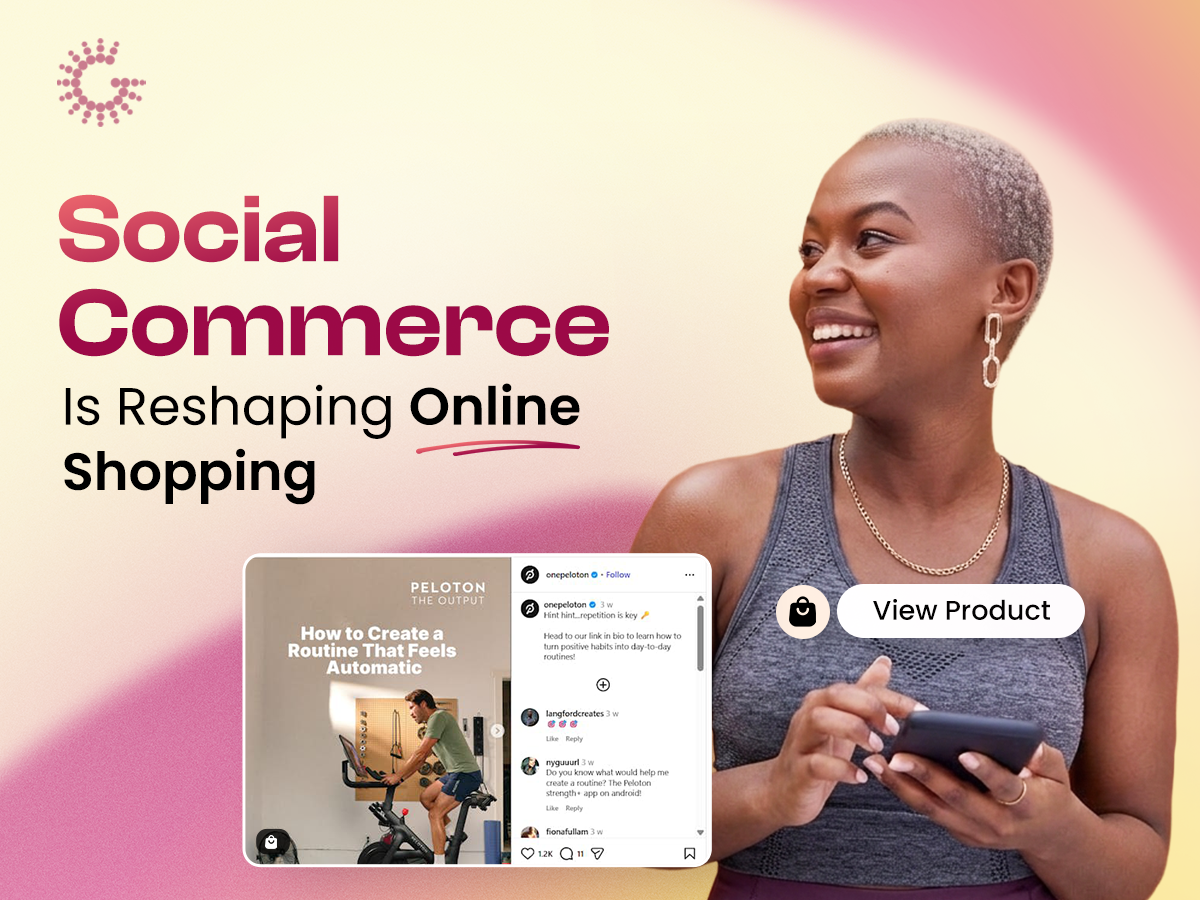
Many buying decisions today start inside social platforms. People discover products while scrolling short videos, watching live sessions, reading comments, saving posts or following creators they trust. What once looked like casual browsing is now part of a much bigger transformation in consumer behavior. That transformation is social commerce.
Social commerce is changing the way people buy online because it reduces the distance between discovery and purchase. It allows people to see a product, learn about it, compare opinions and act on interest without leaving the platform where their attention already exists.
On the surface, this looks like a convenience upgrade. And in many ways, it is.
Social commerce makes shopping feel faster. It makes product discovery feel more natural. It helps brands reach people where they already spend time. It creates more interactive ways to present products and gives customers a more immediate path from curiosity to action.
But there is a truth businesses need to understand. Social commerce is reshaping how people evaluate products, build trust and make purchase decisions. It is changing the customer journey itself.
In the past, people searched for products with strong intent. They visited websites, read descriptions, compared features and moved through a more traditional buying path. Now, many people do not start with intent at all.
A product appears in front of them through content, community or recommendation. The buying journey starts earlier, feels more emotional and generally unfolds in public through comments, shares and reactions.
That changes everything.
Businesses can no longer think only in terms of traffic, product pages and checkout flow. They also need to think about visibility inside feeds, credibility inside conversations and the role of creators, reviews and social proof at the exact moment interest appears.
In this article, we will explain how social commerce is changing the way people buy online. We will also discuss how brands can use social commerce effectively.
Social commerce is the process of selling products directly through social media platforms or through social content that leads to immediate buying action. This includes shoppable posts, in-app product tags, live shopping, creator-led product recommendations, short-form video selling, direct checkout features, messaging-based buying journeys and social ads that connect closely to purchase behavior.
Social media marketing helps promote products. Social commerce helps complete the purchase journey inside or very close to the social platform experience. That means the platform is now a part of discovery, evaluation and conversion.
People do not behave on social platforms the same way they behave on traditional ecommerce websites. They are not always actively searching. They are reacting, exploring, following trends, watching others use products and responding to social signals. The content is not separate from the product. In many cases, the content becomes the product pitch.
That is why social commerce feels different from standard online retail.
The reason is easy to understand. People already spend a large part of their digital time on social platforms. That is where they scroll, watch, talk, save ideas and follow recommendations. As those platforms became more visual, more personalized and more shopping-friendly, it became natural for commerce to move into the same space.
There is also a behavioral reason behind the growth. Traditional ecommerce generally depends on deliberate intent. A person searches for a product because they already know they need something.
Social commerce works differently than traditional ecommerce. It captures interest before the buyer has fully formed that intent. A person may not wake up planning to buy skincare, home décor, fitness accessories or fashion items. But after seeing the right video, review or creator demonstration, they become interested enough to explore.
That makes social commerce powerful. It creates demand at the moment.
There is also less friction involved. Social platforms reduce the number of steps between seeing and buying. The less interruption there is between product discovery and action, the more likely it becomes that people will complete the purchase.
At the same time, social content feels more human than many traditional product pages. People are seeing products used in real life, explained by real people and discussed in public by other customers.
That combination of visibility, convenience and social proof is one of the biggest reasons social commerce continues to grow.
One of the most important changes is that discovery and conversion are moving closer together. In a more traditional journey, the path looked like this:
Social commerce compresses that process.
Now the journey may look more like this:
That is a very different buying path.
The evaluation stage becomes more emotional, more visual and more socially influenced. Instead of relying only on product specifications, buyers rely on context. They want to see how the product looks, feels, fits, solves a problem or fits into a lifestyle.
This shortens the gap between interest and action. But it also means brands need to earn trust faster. A person may spend only seconds deciding whether a product feels credible enough to explore.
There are many reasons, and most of them connect back to convenience and trust.
First, social commerce feels natural because it happens where people already are. They do not need to leave the platform, open multiple tabs or restart the buying process elsewhere. That makes the path feel easier.
Second, social content gives buyers faster context. A product page may tell people what a product is. A social video shows what it does, who it is for and why people care about it. That reduces uncertainty quickly.
Third, the experience feels more interactive. Buyers can read comments, ask questions, watch demonstrations and see reactions from other users in real time or near real time. This makes the shopping experience feel more alive than static catalog browsing.
Fourth, social platforms make discovery more personalized. Users are shown products based on interests, engagement patterns, creators they follow and content they have already interacted with. That means the products appearing in front of them generally feel more relevant.
Fifth, social commerce fits modern attention habits. Many people now make decisions in small digital moments. They save ideas between tasks, revisit posts later, share product links with friends and return when they are ready to buy. Social platforms support that behavior more naturally than many traditional online stores.
That does not mean every product should be sold through social commerce. But it does explain why more buyers are comfortable making purchase decisions there.
For years, online buying depended heavily on search behavior. A person knew what they wanted. They searched for it. Brands competed to appear in front of that demand.
Social commerce changes that model because discovery now plays a larger role. People are finding products before they decide to look for them directly. The platform introduces the product through interest signals, content relevance and social influence.
This presents a major transformative period for businesses. It means brands can no longer rely only on capturing search intent. They also need to create discovery-worthy content. That content must be engaging enough to stop attention, clear enough to communicate value and credible enough to create confidence.
In many categories, the first brand interaction is a post, video, creator mention or live session. That changes how brands need to think about visibility. The product has to compete not only with similar products, but with everything else in the feed.
This is why strong storytelling matters are so crucial. A product is easier to ignore when it appears as a plain listing. It is much harder to ignore when it appears inside a transformation video, a tutorial, a personal recommendation or a relatable everyday moment.
Discovery is becoming more emotional, and that emotion shapes the buying decision before rational comparison begins.
On a standard ecommerce website, reviews are usually contained on the product page. In social commerce, proof appears all around the product. It exists in comments, shares, likes, duets, testimonials, unboxing videos, creator endorsements, user-generated content and community discussion.
This creates a different kind of trust environment.
People are no longer relying only on what the brand says about itself. They are also seeing how other people react to the product in public. That public response affects credibility.
If a video has strong engagement, if comments mention positive experiences, if users ask where to buy, if creators show repeat use, all of that sends a signal. It tells viewers that the product does not exist in isolation. It is already part of a broader conversation. That makes the decision feel safer.
At the same time, negative social proof can spread quickly too. Poor reviews, disappointed comments or creator criticism can reduce confidence just as fast. Social commerce amplifies both positive and negative signals because everything happens closer to the point of attention.
That is why brands cannot treat social commerce like simple promotion. They need to monitor trust, response quality and customer satisfaction continuously.
Creators play a much larger role than many businesses first realize. In social commerce, creators act as the bridge between product and trust. They translate a brand message into something more relatable, more visual and more believable for their audience.
In many cases, smaller niche creators are even more effective because their audiences trust them more deeply. Their recommendations feel less like advertising and more like informed personal guidance.
That is crucial because social commerce works best when the product feels embedded in real life. A creator can show how an item fits into a daily routine, solves a practical problem or compares with alternatives. That context is more persuasive than polished brand messaging alone.
Creators also help brands reach highly specific communities. A fitness creator, parenting creator, beauty creator, tech creator or home organization creator can make a product relevant to a particular audience in a way generic advertising cannot.
But there is also a risk businesses need to understand.
Not every creator partnership builds trust. If the promotion feels forced, overly scripted or disconnected from the creator’s usual content, audiences notice quickly. Social commerce performs better when the partnership feels authentic, useful and naturally aligned with the creator’s voice.
The strongest creator-led commerce usually happens when:
Because it reduces delay. Traditional ecommerce gives people time to think, compare and step away. Social commerce presents products inside a fast-moving environment where interest, emotion and action happen close together.
A person sees a product demonstrated in a compelling way. They feel immediate interest. The product link is right there. The checkout path is simple. The momentum remains intact. That increases the likelihood of impulse buying.
This is especially true for products that are visually appealing, easy to understand or tied to lifestyle aspiration. Fashion, beauty, gadgets, kitchen tools, wellness items, décor and trend-driven products perform strongly in social commerce for this reason.
But the increase in impulse buying is also about emotional framing.
Social content presents products through transformation, identity or belonging. A product is shown as part of a better routine, a more stylish appearance, a cleaner home, a smarter solution or a desirable trend. That emotional packaging makes action feel more immediate.
For businesses, this can create more conversions. But it also creates responsibility.
If the product does not match the expectation created by the content, disappointment follows quickly. Refund risk, negative comments and weakened trust can grow. Social commerce may speed up the sale, but long-term performance still depends on meeting the promise.
Personalization is one of the biggest forces behind social commerce success. Social platforms learn from behavior. They notice what users watch, like, save, share, comment on and follow. That behavior helps determine what products and product-related content appear next.
This creates a more individualized shopping experience. Instead of browsing a general storefront, users are generally shown products that already connect to their interests, aspirations or recent attention patterns. That increases relevance. And relevance increases the chance of engagement and purchase.
But personalization does more than improve targeting. It changes expectations. Once people get used to seeing products that fit their lifestyle or interests, they become less patient with generic messaging. Brands need to make content that feels specific. They need to understand customer segments more clearly and tailor creative approaches accordingly.
This is where many businesses struggle. They assume social commerce is only about posting more product videos. But volume alone does not create performance. The message, creative angle and audience fit can actually be more important. A highly relevant product story shown to the right person generally outperforms a large volume of generic product promotion.
Personalization makes social commerce feel efficient for the user. But for the brand, it raises the standard for content quality and audience understanding.
Trust is becoming more layered. On traditional ecommerce sites, trust depends on website design, product pages, reviews, shipping information and brand reputation. In social commerce, those factors are still there but they are joined by new signals.
Now trust also depends on:
This means brands need to build trust before the buyer even reaches a full product page.
The content itself becomes a trust signal. The tone, clarity, demonstrations, reactions and transparency all matter. If a brand hides behind vague claims or overproduced hype, audiences may lose confidence. If the content feels honest, specific and useful, trust grows faster. That is the real challenge.
Here are five of the biggest shifts businesses need to understand.
A static product listing is no longer the only path to conversion. Buyers now make decisions from videos, live streams, creator recommendations and user-generated content. The content itself carries the selling function.
Social commerce removes steps. The fewer interruptions there are between product interest and checkout, the more likely conversion becomes.
Comments, reactions and community responses now shape purchase decisions in real time. Trust is formed in public, not only in private research.
Products that connect to identity, lifestyle, self-improvement or belonging perform strongly because social platforms are emotional environments. Buyers are influenced by how products make them feel, not only by features.
In social commerce, attention is not only at the top of the funnel. It is an active conversion space. Brands need to treat creative content as part of sales, not just awareness.
Social commerce creates opportunity, but it also creates new risks.
A post can get views, likes and shares without driving meaningful sales. Businesses need to separate attention metrics from purchase metrics.
Trend-driven content can create quick spikes, but it does not always build durable brand value. A business needs consistency, not only viral moments.
If a product looks exciting in a video but disappoints in real use, the feedback loop is fast and public. Social commerce can amplify weak customer experience.
When multiple creators, formats and campaigns promote the same product, the brand message can become fragmented. Without clear guidance, the brand may lose coherence.
Aggressive selling tactics may lift initial purchases, but they can weaken credibility if the content feels manipulative or exaggerated. Long-term growth still depends on trust.
The best approach is not to make social commerce part of a broader customer strategy. A practical approach usually includes the following steps.
Understand how your customers discover, evaluate and talk about products. The platform matters, but the audience behavior matters more.
Show the product in context. Explain what problem it solves. Make the use case obvious. Social commerce performs better when people can understand the value quickly.
Choose creators whose audience, tone and content style genuinely fit the brand. Relevance matters more than follower count alone.
Encourage reviews, customer content, authentic demonstrations and transparent responses. Trust grows when people see real usage and honest interaction.
Track conversion quality, repeat purchase behavior, return rates, customer sentiment and content-to-sale relationships. A strong social commerce strategy should improve business performance, not only visibility.
The future is unlikely to belong only to the brands with the loudest content. It will belong to the brands that combine visibility with credibility.
Social commerce will continue to grow because it matches how people already use digital platforms. They want faster discovery, more visual proof, easier comparison and fewer barriers to action. Platforms will keep making shopping more integrated, more personalized and more interactive.
But that does not mean brands can rely on convenience alone. As more businesses compete inside social platforms, audiences will become more selective. Generic product videos will blend together. Forced creator promotions will lose impact. Overhyped claims will create backlash faster.
That means future success will depend on stronger fundamentals:
In many ways, social commerce is raising the standard for online retail. It rewards brands that understand not only what they sell, but how people discover, evaluate and talk about that product in real life.
The most effective businesses are not using social commerce only to chase fast sales. They are using it to build a stronger connection between content, trust and conversion.
Look at the questions customers ask most regularly and turn those into short videos, demos, comparisons and FAQs for social channels. Real questions can lead to strong commerce content.
Use comments, direct messages, reviews and support conversations to understand how people describe their needs. That language helps content feel more relevant and less generic.
Show outcomes, demonstrations, before-and-after use, testimonials and realistic expectations. Proof converts better than polished claims.
Some products sell best through live demos. Others work through short videos, creator reviews or visual tutorials. Choose the format that makes the product easiest to understand.
Fast buying means post-purchase experience matters even more. Shipping clarity, product quality, customer support and response speed all influence whether social commerce becomes sustainable.
If your business wants to use social commerce more effectively, the goal should not be to post more product content just to keep up with trends. The real goal is to build a strategy that connects discovery, trust and conversion in a more meaningful and measurable way.
That means understanding your audience clearly, choosing the right creators carefully and creating content that shows real value instead of making empty claims. It also means treating customer experience as an essential part of your commerce strategy, not just something that happens after the sale.
At TechGlobe IT Solutions, we help businesses create social commerce strategies that do more than drive quick engagement. We focus on building systems that support long-term growth through stronger brand credibility, better customer experiences and content that converts.
Social commerce can create faster buying moments, but long-term success still depends on product quality, brand trust and customer satisfaction. Businesses that get these elements right will not just benefit from the growth of social commerce. They will be better prepared for the future of online buying. Talk to us and start building a smarter social commerce strategy today.
Social commerce is the selling of products through social media platforms or through social content that leads directly to purchase action. It combines product discovery, engagement and buying in a connected experience.
Ecommerce usually happens on dedicated online stores or marketplaces. Social commerce happens within social platforms or very close to them, where content, community and shopping are more tightly connected.
It is growing because people already spend a large amount of time on social platforms, and those platforms now make it easier to discover, evaluate and buy products without leaving the experience.
Yes, it usually does. Social commerce reduces the time and friction between interest and action, which can lead to faster and more emotionally driven purchases.
Products that are visual, easy to demonstrate, lifestyle-driven or problem-solving perform well. Fashion, beauty, wellness, home products, accessories and certain gadgets are common examples.
Creators help make products feel relatable and trustworthy. They show real use cases, speak to specific communities and influence purchase decisions more effectively than traditional brand messaging alone.
No. Smaller brands can also perform well, especially when they understand their niche audience, create strong proof-based content and build authentic creator or community relationships.
One of the biggest mistakes is focusing only on visibility or engagement while ignoring conversion quality, customer trust and post-purchase experience. Attention alone is not enough.
They can build trust by showing products honestly, using credible creators, encouraging real customer feedback, responding clearly in comments and making sure the product experience matches the promise in the content.
The smartest approach is to treat social commerce as part of a broader strategy. Use it to shorten discovery and buying paths, but support it with strong messaging, real proof, consistent branding and a reliable customer experience.